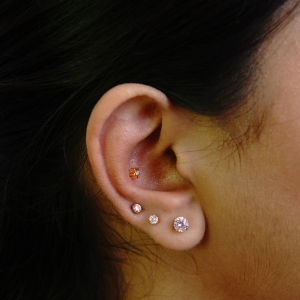
Most people are familiar with the basics of facial piercing aftercare or can easily find plenty of information online. Cleaning with saline twice a day and avoiding unnecessary touching are excellent foundations for healing. However, aftercare isn’t one-size-fits-all. Oily, dry, and sensitive skin types each face unique challenges and can show different signs throughout the healing process. Understanding how your skin type affects healing can help you recognize what’s normal, avoid common mistakes, and support a smoother recovery instead of spending weeks wondering why your piercing isn’t healing as expected.
How to take care of cheek, ear, or nose piercings with Oily Skin
Sebum is something we all produce, but those with oily skin naturally produce more of it. This mixes with the clear fluid the wounded area usually secretes, creating what we call crusties. They can be a lot and form over and over again. Which is why many people with greasy faces tend to mistake them for an infection. This makes them overly clean with harsh products. And in some cases, people remove their jewellery, completely unnecessarily, from a wound that was healing normally.
Whatever buildup you see is your skin’s natural response. So when cleaning, keep in mind you don’t scrub off the crusty layer as it can be aggressive. Simply use a cleaning solution like STUDEX® Advanced 2-IN-1 Piercing aftercare guide and Cleanser to gently wipe off any dirt. Oily skin also calls for more patience when applying skincare products like face oils and serums so they don’t reach the wound.
In areas already full of oily glands, adding more product only causes buildup. Skincare can also introduce ingredients that irritate disturbed tissue.
What to Expect from any facial piercing If You Have Dry Skin
Dry skin’s problem is cracking. If your face is dry, the cracking can happen around the piercings at the entry and exit points. Because your face naturally retains less moisture, it’s prone to small splits especially in winter or if you stay somewhere with dry AC air all day. These cracks are uncomfortable and if left unmanaged they can let bacteria into the site, which you would want to avoid.
The instinct is usually to reach for a balm or lotion, but applying products directly onto a piercing in the healing phase is not the answer since it introduces ingredients into an open wound. What actually helps is keeping the area around it moisturized, the focus here is “around,” not on top of the area. This reduces the dryness at the edges without interfering with the progress of the healing channel.
Dry skin types also often describe their healing piercings as feeling tighter and more stiff in the early weeks than they expected. That’s normal for this type, and it eases as healing progresses. It’s not a sign of rejection as many people assume.
If You Have Sensitive Skin and Fresh Piercings, This Is the Aftercare
One of the most common healing experiences for people with sensitive or reactive skin is prolonged redness around the piercing site. While most facial piercings show some initial redness that typically fades within the first few weeks, those with sensitive skin may notice redness lasting six, eight, or even ten weeks during the healing process. In many cases, this is not a sign of a piercing infection, allergic reaction, or complication; it’s simply a normal inflammatory response that can occur with sensitive skin. Understanding the difference between expected healing and actual warning signs can help you avoid unnecessary concern and support proper piercing aftercare.
This issue often gets misdiagnosed repeatedly. People with sensitive skin are told their piercing is infected when it is actually just healing, or they assume it themselves and start applying products that can make things worse. When searching for a Piercing near me, it is important to choose a professional who understands skin sensitivity and proper healing. If you know you tend to react to certain materials, keep this in mind throughout your healing journey. The most important factor for sensitive individuals is jewelry material. Implant-grade titanium is the safest option for a fresh piercing. Even solid gold, while excellent for jewelry, contains alloy metals that may not suit sensitive skin. Starting with titanium and switching to gold after full healing is the most sensible approach for this skin type.
What Stays the Same for Everyone
- Cleaning with a good solution spray, preferably twice a day and only then air dry completely.
- Never playing with the jewelry or pulling on it even gently.
- No submerging the piercing in pools, lakes, or baths for the first eight weeks at minimum
- alcohol, hydrogen peroxide, or thick creams are never a good idea if applied directly to the wounded area regardless of what you’ve read elsewhere
- Keep unwashed hands away from the piercing as bacteria is a threat
Takeaway
For people with oily skin, feeling a crusty layer is normal. For those whose skin gets easily irritated seeing some redness even after a few weeks is okay. People with dry face or body tend to experience more cracking and tightness around the area, and that’s fine for them. Everyone has their normal, for which they just need to take extra care and avoid a few things that you got to know about in this blog.
If you found this helpful and are looking for a reliable place to get your body or facial piercing visit your nearest Galima professional piercing and aftercare.