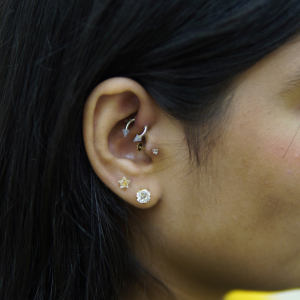
What would you do if you finally get that piercing you’ve been thinking about for weeks and notice it’s shifting?. If you don’t have a clear answer, it’s a sign you need to go through this blog before you get a belly piercing or a new addition to your facial adornments. Migration is something that doesn’t take long, especially with a navel or facial piercing. It happens without you noticing in just a few days. It can happen that one day you’re excited because you feel it’s healed, and you reach for a mirror to adore it but the position feels off, the jewelry doesn’t sit where you put it at first. And at that moment, if you don’t do something fast, it might shift even more or over time simply get rejected.
Is This Something To Be Concerned About?
One word answer is yes. If you see a slight shift or a thin skin around the piercings, it most likely means that what you might be experiencing is a thing called piercing migration. And this is not something that rarely happens, it often can be seen especially on surface piercings like the navel, eyebrows or any other facial piercings. And once it shifts to a spot, it can’t be reversed, no matter how careful you are. So what can you do? Keep a close eye and take precautions like no rubbing onto things or staying far away from friction.
In this blog, we’ll talk about all the information about piercing migration that we gathered from our professionals at Galima. You’ll get to know what, why and where of this problem so you can be prepared beforehand and avoid all this trouble.
Migration- the basics
To clear it up for those who are still unsure what this actually is, it basically means that sometimes your body doesn’t welcome jewelry and causes it to move. For instance, you may get an upper lobe piercing, but over time it starts looking more like a normal lobe. Slowly, your body begins nudging the jewelry toward the surface, trying to eject it just as it would any foreign object. This is your body’s natural protective response. Many people searching for a Piercing near me don’t realize this can happen because the process is slow and often unnoticeable. You don’t wake up one day to find it gone or completely out of place it happens gradually and sneakily, which is why most people don’t catch it in time.
From our experience with our clients, people notice it when they suddenly see more of the jewelry than they were able to before. For instance, they see more of the eyebrow bar or more of their top is visible when they push it forward. Clients also report the skin between the holes looking thinner and shinier than before. And after hearing this it clicks instantly that they are experiencing migration and we guide them on what to do next. The frustrating thing is that mostly there’s no pain, which is why people ignore it and assume it’s nothing or just hope it’ll just fix itself. This never happens unless it was just swollen up and mistaken for migrated.
What’s The Difference Between Migration And Rejection
These two often get mixed up but they’re not the same. These are two different stages which you should know about to understand if your new jewellery can be saved or you should prepare to say goodbye.
- Migration means the piercing is moving but still hanging on.
- Rejection means the body is fully done with it and pushes it out completely.
Take the first one as a red flag and an early signal. This is where you can keep a hope that you can still keep it sometimes by making the jewellery looser or other factors that are causing it to move. But If you ignore it long enough or simply don’t notice it, rejection usually follows. And this can even leave scars behind, which won’t look as good as the sparkle would have.
Reasons Behind It
It’s not as simple as you might expect and this is usually not because of a big mistake, instead, the culprits are the small habits or wrong things that add up. First and most commonly, the actual jewellery isn’t of the right material or size. More than half of the time, this is the mistake that causes this awful problem and most people don’t give a thought to it. So it’s obliviousness plus everyday habits that snowball into this frustrating issue.
Then comes the placement, which is the second most common issue. Traditional piercers who pierce with wires might make it too tight or the actual wire might not be of the highest quality. But don’t take this wrong, even with good piercers this can happen because every body reacts differently. The same material, the same spot, and by the same piercer can be fine for one and might migrate for others.
Everyday habits can also be an issue. Doing activities that cause friction can become a big mistake like sleeping on the side where it’s pierced or wearing tight jeans or any clothing that sits on your belly. These might seem small but are the biggest cause behind rejection and migration. For pierced facial spots like smiley or eyebrows, hairs or hats, glasses can be the reason behind the friction and ultimately shifting.
The less common but equally real reason is that some areas of the body just don’t have a lot of strong tissue either, so they’re naturally more likely to migrate. And because everyone’s body is different, like some have more skin on a certain area, some have more tissue, this can’t be deduced earlier.
Why are facial piercings more prone to this?
Pierced facial areas are more exposed and vulnerable than you might observe. They never really get a break. We talk and smile, we make expressions, and this is a lot of movement. Then, faces are washed daily and more than once, skincare is applied and all of us rub our eyes sometimes. This is why the skin just moves a lot more than a normal piercing does. So when your pierced eyebrow, cheek or any other spot starts getting irritated, migration can creep in. And the signs are redness, thin skin around it or the bar or ring becoming more visible. On top of all this, facial skin scars easily too, so this is one you don’t want to ignore for months, hoping for a miracle.
Belly piercing is a troublemaker
If you already have a belly piercing, or someone close to you, like your sister does, you must already know it lives a rough life. You struggle with the waistband pressing on it or see your friend struggling when sitting with tight jeans on her newly pierced navel. All of this put pressure. And this constant pressure slowly pushes the jewelry outwards and gives you more stress than you signed up for. If you want to spot an early migration, look for the top hole stretching or the jewelry suddenly feeling looser than before. These also take forever to heal compared to others but it’s always worth it once you go through the healing journey. It’s a really good addition to your body adornments.
How to actually prevent piercing migration
First things first, pick a good piercer and good jewelry. You can always choose Galima because here our piercers are trained professionals and experienced. We also have our branches in multiple places in many cities in Pakistan so you can find the one nearest to you. Choosing us or an experienced piercer alone prevents so many problems.
Second, try to reduce pressure as much as you can. Looser clothes are always a best friend for those with belly piercings. Other than this try not to sleep directly on facial piercings if you can help it and if not get a donut-shaped pillow made exactly for this. And lastly, never rush changing jewelry or you might risk completely losing it. Just because it looks healed doesn’t mean it is.
When to come see a professional
- If the piercing is clearly moving
- The skin looks thin or angry
- There’s increasing pain, redness, or discharge
These are some signs you should never ignore or wait it out. Let someone experienced actually look at it. Sometimes a small adjustment saves it like making it a tad bit looser or tighter.
Final thoughts
This problem isn’t rare and sometimes happens even if you’re careful but what you can do is keep an eye. This saves you from complications, pain and having to take the jewelry out. Whether it’s a facial piercing or a belly piercing, a little awareness and early care go a long way. And if you’re ever unsure, that’s literally what professional piercers are for. Visit Galima today to get yourself a new piercing or if you see something unusual, get guidance from our experienced professionals.